

General Surgery
Robotic Surgery
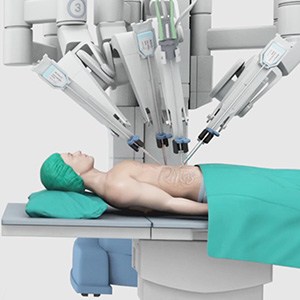
Robotic surgery refers to the use of advanced robotic systems to assist surgeons in performing minimally invasive procedures with greater precision, flexibility, and control. These robotic-assisted surgeries typically involve robotic systems, such as the da Vinci Surgical System, which consists of robotic arms controlled by a surgeon from a console.
Laparoscopic Cholecystectomy

Laparoscopic cholecystectomy is a minimally invasive surgical procedure using a laparoscope to remove the gallbladder for the treatment of gallbladder problems. The gallbladder is a small, hollow organ situated below the liver.
Hernia Repair
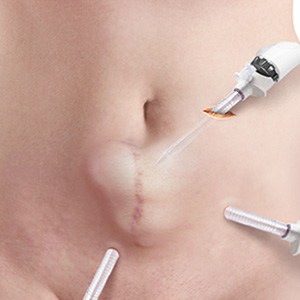
A hernia is a bulge or protrusion of an organ or fatty tissue through a weakened area in the muscle or connective tissue in which the organ is enclosed. A hernia can develop in any part of the body. However, the muscles of the abdominal wall are most commonly affected.
Incisional Hernia Repair
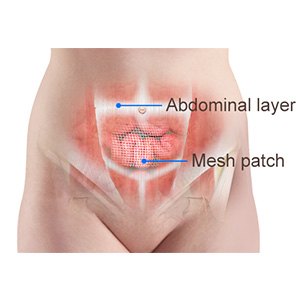
An incisional hernia repair is a surgical procedure performed for the treatment of a medical condition called an incisional hernia. A hernia is a bulge that develops when the internal organs of the abdominal cavity are pushed out through a weakened spot in the abdominal wall.
Splenectomy
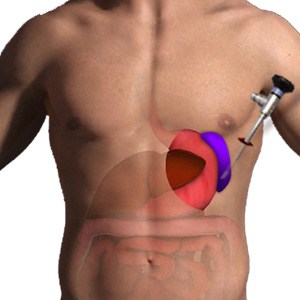
Splenectomy is the surgical removal of spleen, a large organ located in the upper left part of the stomach that contains macrophages, specialized cells that fight against the foreign bodies. Splenectomy is indicated in splenomegaly, a condition of enlarged spleen.
Appendectomy
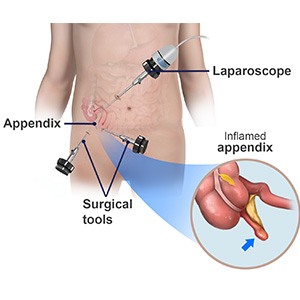
An appendectomy is the surgical removal of the appendix. The appendix is a finger-like pouch attached to the large intestine and located in the lower right area of the abdomen. The exact function of this organ is not clear.
Hernia Treatments

A hernia is a bulge or protrusion of an organ or fatty tissue through a weakened area in the muscle or connective tissue in which the organ is enclosed. A hernia can develop in any part of the body; however, the muscles of the abdominal wall are most commonly affected. Symptoms may include pain, aching, discomfort, or a heaviness in the affected area.
Open Hernia Surgery
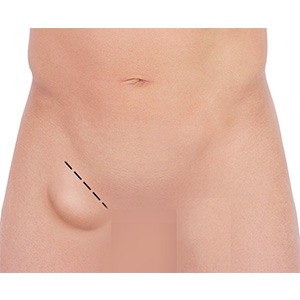
A hernia is a weakness or defect in the abdominal wall. It may be present from birth or develop over a period of time. If the defect is large enough, abdominal contents such as the bowels may protrude through the defect causing a lump or bulge felt by the patient.
Robotic Hernia Surgery
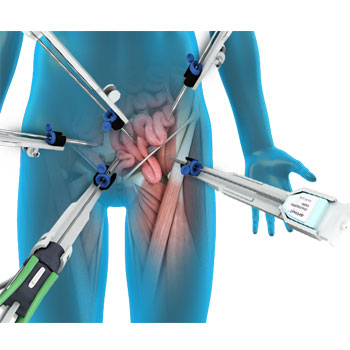
Robotic-assisted hernia repair is a minimally invasive advanced surgical technique that is performed by your surgeon using a robotic system. A robotic system consists of a surgeon’s console, a patient-side cart with four interactive robotic arms, a high-performance vision system (3D camera), and miniaturized endoscopic surgical tools.
Adrenal Surgery
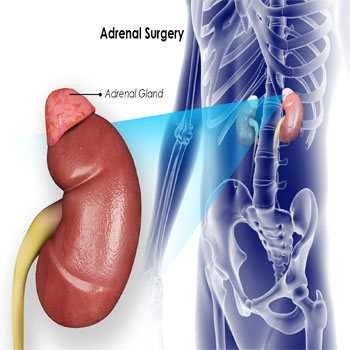
Adrenal surgery involves the removal of one or both adrenal glands. The adrenal glands are paired endocrine glands located above each kidney. The surgical procedure of adrenal gland removal is known as an adrenalectomy. Adrenalectomy can be performed either with laparoscopic technique or open surgery.
Adrenal Tumors

The adrenal glands, situated above each kidney, are endocrine glands that secrete hormones into the blood to regulate metabolism and various sexual functions, and respond to emergency situations. Each gland is made up of an outer cortex and an inner medulla. Tumors in the adrenal gland are rare and usually benign, but may also be malignant. They are caused by an inherited faulty gene.